
CASE STUDY
Prince William County Public Schools:
How a Structured Cell Tower Partnership Turned Underused Land into $550,000 in Non-Tax Revenue

Executive Summary
Prince William County Public Schools (PWCS) — one of Virginia’s largest school divisions — had a cell tower program that existed mostly on paper: no standardized contracts, no defined process, and no dedicated staff. After a key employee departure left the program without an owner, PWCS partnered with Milestone Towers to build a structured, scalable framework from the ground up.
The results over five years: six cell towers built, approximately $550,000 in non-tax revenue directed to school division priorities, and measurably improved wireless coverage across district properties — all with minimal burden on facilities staff. The partnership offers a proven, replicable model for any school district sitting on underutilized land and looking for revenue that doesn’t come from taxpayers’ pockets.
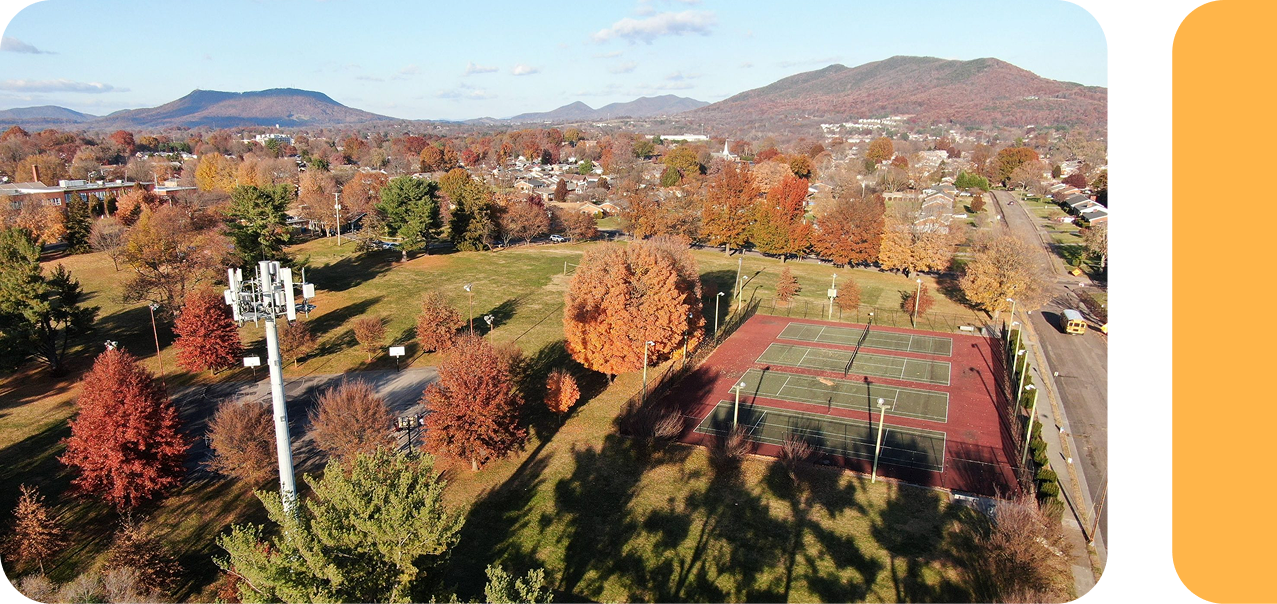

About the Customer
Prince William County Public Schools serves a growing, diverse student population across dozens of school sites in Northern Virginia. The district manages a substantial property portfolio — and with it, the complex challenge of balancing long-term development plans with opportunities to generate value from land that isn’t being fully utilized.
The district’s Facilities Department, led in part by Azmir Kabilovic, Supervisor of Projects, Permits and Records, oversees permitting, land use, and lease coordination — the operational backbone that makes public-private partnerships like this one possible.
The Challenge: Operating Beyond the Original Playbook
PWCS had technically allowed cell towers on school property before Milestone entered the picture. But “allowed” is generous. The reality was a patchwork of one-off agreements with no standardized terms, no formal application process for tower developers, and no consistent way to evaluate whether a proposed site aligned with the district’s long-term plans. Then the situation got worse.
The supervisor who had managed land acquisition and lease agreements left the school division. The cell tower work — such as it was — landed on Kabilovic’s desk as an interim responsibility. He inherited a program with no documentation trail, no institutional knowledge, and no framework to guide decisions.
The core problem wasn’t that PWCS lacked interest in generating revenue from its properties. It was that no one had ever built the infrastructure — contractual, procedural, operational — to do it reliably.
For administrators at other districts, this scenario will sound painfully familiar: a well-intentioned initiative that never received the institutional framework it needed, made fragile by a staffing transition that left no one clearly in charge and no playbook to follow.
PWCS needed more than a vendor. It needed a partner who could bring structure to chaos — without adding to the workload of a facilities team already stretched thin.
The Solution: A Master Lease Agreement That Defined Every Step
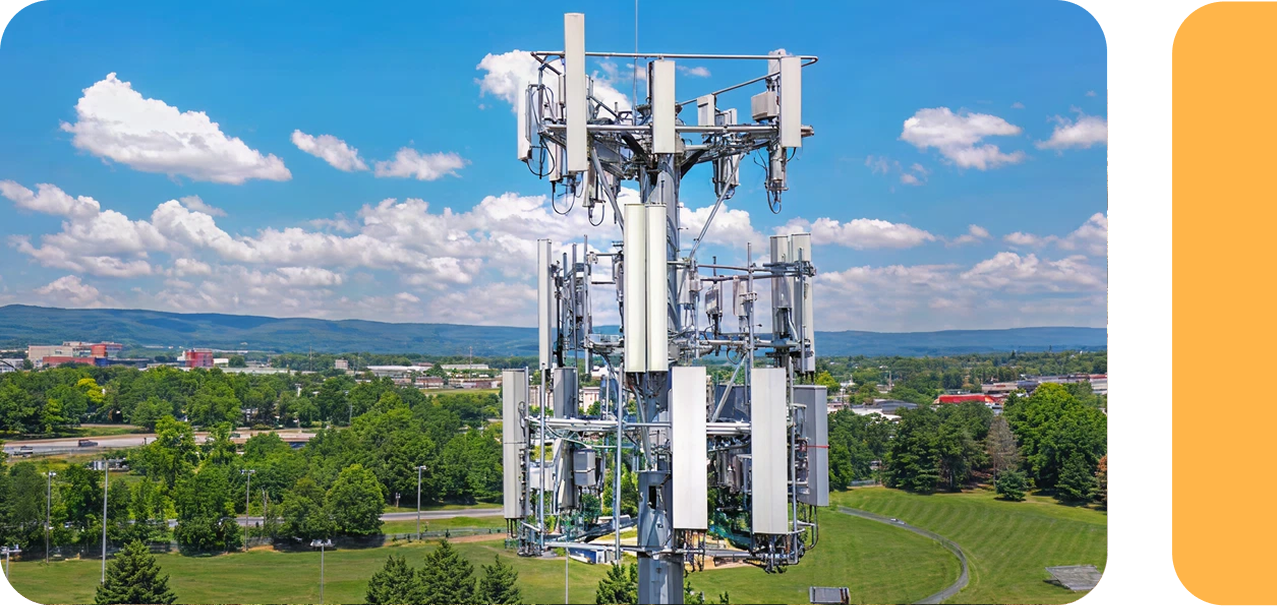
Milestone Towers didn’t hand PWCS a contract and walk away. It brought a Master Lease Agreement (MLA) — a comprehensive framework that defined how cell tower sites would be identified, evaluated, approved, built, and managed across the district’s entire property portfolio.
The MLA replaced ad hoc decision-making with a repeatable process. Every site follows the same path. Every stakeholder knows their role.
| 1. Site Identification
Milestone contacts PWCS to request a site visit for a specific property. Site selection is driven by coverage data from mobile network operators — identifying where signal gaps exist and where new infrastructure would deliver the greatest impact. That data is shared with the district upon request, giving PWCS visibility into the rationale behind each proposal.
|
2. Joint Site Walk and Concept Plan Review
Milestone and PWCS walk the property together, identify a suitable location, and discuss project specifics on-site. Milestone then submits a detailed schematic plan for the district’s internal review — ensuring nothing moves forward without the district’s informed input
|
|
3. Internal Review and Approval PWCS evaluates the proposed site against future development plans, coordinates review with consultants and legal counsel, and confirms that all contract terms meet district standards. Only after all internal requirements are satisfied does the lease agreement move to the School Board agenda for formal approval. |
4. Community Outreach (Milestone-Led) This is where many partnerships create friction — and where Milestone deliberately removes it. Milestone owns the community engagement process end-to-end. PWCS requires all applicants to complete community outreach before School Board consideration, and Milestone handles every aspect of that responsibility so district staff can stay focused on governance and approvals.. |
Why This Model Works
The genius of the MLA isn’t complexity — it’s clarity. Milestone didn’t ask PWCS to become a telecommunications expert. Instead, the agreement drew a clean line:
- Milestone handles: site selection, carrier relationships, community outreach, construction, and ongoing tower operations.
- PWCS retains control over: long-term site planning, internal review processes, School Board policy compliance, and final approval authority.
The district never gives up governance. It gains a revenue stream.
Milestone’s team has always been professional and detailed. We have not experienced any situations where Milestone failed to communicate or to provide needed documentation.

Azmir Kabilovic
Supervisor of Projects,
Permits and Records, PWCS

The Results: Revenue, Infrastructure, and Coverage — Without the Headaches
| $550,000 in Non-Tax Revenue Over Five Years
The program has generated approximately $550,000 in revenue directed toward school division projects and initiatives. This is money that didn’t come from a tax increase, a bond referendum, or a budget reallocation. It came from making productive use of land the district already owned. To put that in perspective: $550,000 is the equivalent of funding that might otherwise require a line item in a capital improvement budget — generated passively from existing assets.
|
Measurable Wireless Coverage Improvement
“Definitely significant improvement with coverage” across the district properties where towers have been built. — Azmir Kabilovic While PWCS does not collect community feedback data directly — that responsibility falls to the tower owner — the coverage improvements benefit students, staff, families, and the surrounding neighborhoods. In an era when reliable connectivity is essential for everything from emergency communications to digital learning, this is a community benefit that compounds over time.
|
|
Operational Efficiency for an Already-Stretched Team “For a facilities department managing dozens of competing priorities across one of Virginia’s largest school divisions, the structured MLA process transformed cell tower requests from ad hoc disruptions into a predictable, manageable workflow. There is a defined process, a standard contract framework, and a partner who handles the heavy lifting — so Kabilovic’s team can focus on the work only they can do. |
Six Cell Towers Built Across District Properties Six towers are now operational on PWCS properties, including a standout early installation at Freedom High School that helped establish the program’s credibility and demonstrate the model’s viability to School Board members. |
Advice for Other Districts: Build the Framework First
When asked what he would tell another school district administrator considering a similar partnership, Kabilovic didn’t hedge:
“Develop a comprehensive plan, application process, and the standard contract applicable to all providers.”
That single sentence captures the most important lesson from the PWCS experience. The districts that struggle with cell tower programs aren’t the ones that lack interested carriers — it’s the ones that lack a framework for saying yes (or no) consistently, transparently, and efficiently.
The Milestone MLA provides exactly that framework. Rather than negotiating one-off agreements with different terms, different carriers, and different expectations, a master agreement creates consistency — for the district, for the partner, and for the School Board members who ultimately approve each site.
Why This Model Is Worth Considering
For school districts evaluating whether a cell tower partnership makes sense, the PWCS experience highlights five replicable advantages:
| Benefit | PWCS Result |
|---|---|
| Revenue without tax burden | ~$550,000 over five years from land already in the district’s portfolio |
| Minimal staff burden | Partner handles site selection, carrier negotiations, outreach, construction, and operations |
| Board-friendly governance | Each site follows a defined approval path aligned with existing School Board policies — no special exceptions |
| Community benefit | Measurably improved wireless coverage for students, staff, families, and neighbors |
| Scalable framework | Six sites completed using the same repeatable process; additional sites under evaluation |